Not that long ago, city traffic lights followed a rigid script, freight routes were planned with paper maps, and transportation systems were blind, operating without insight into the roads they managed.
Today, something extraordinary is happening.
Artificial Intelligence is stepping in, not just to guide vehicles, but to orchestrate entire transportation networks, taking on the biggest challenges in modern mobility.
Facing a System That’s Struggling to Keep Up
For decades, the $3.5 trillion global transportation industry has run on outdated models and reactive decision-making. Congestion eats away at productivity. Unexpected vehicle breakdowns cost billions. Pollution rises from cars idling in traffic. The very infrastructure meant to keep us moving has become the bottleneck of progress.
But what if the system could learn and improve?
What if roads, vehicles, and transit networks could predict problems before they happened, adapt in real time, exchange information instantly, and improve the way we move every single day?
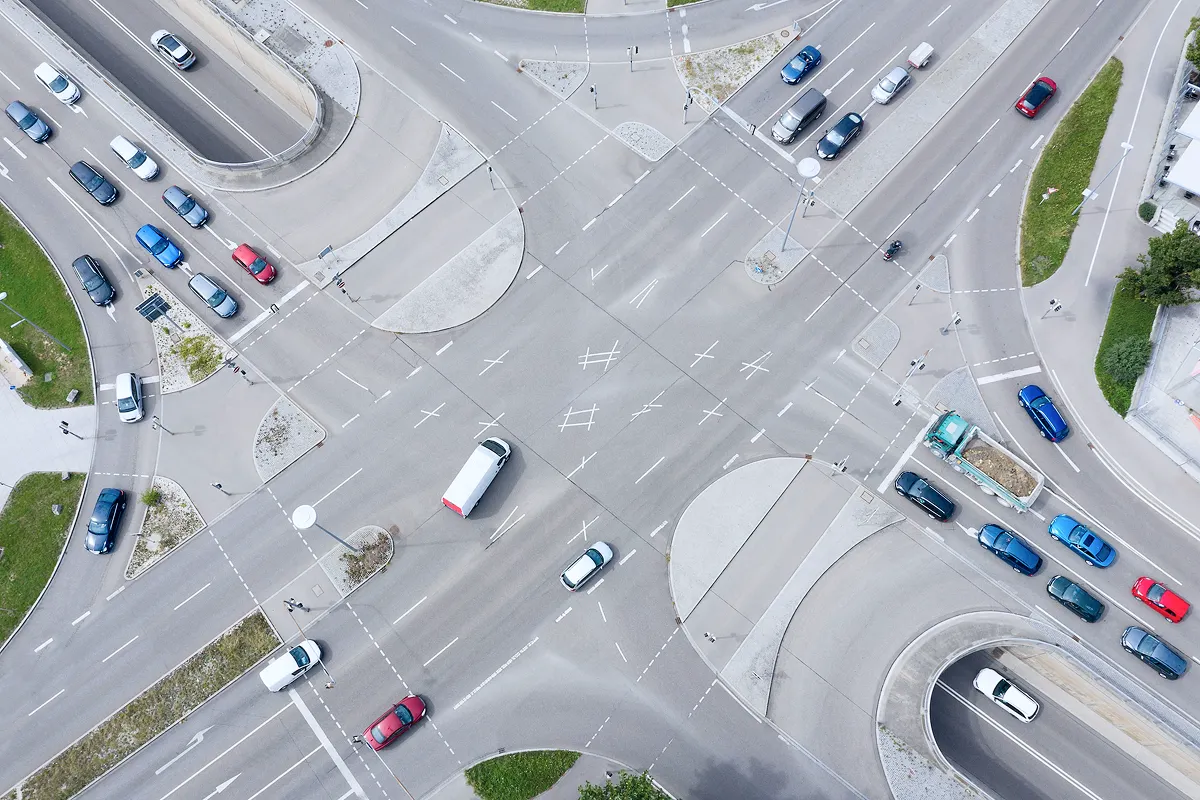
Modern AI digests and aligns messy information into high-value signals
Fueling Intelligence with Millions of Miles of Data
AI transforms chaos into clarity. It feeds on trillions of data points from vehicle sensors, weather feeds, mobile apps, road transactions, and traffic cameras. It processes them at speeds no human team could match. And most importantly, it acts. No delay.
Decades of commutes, delivery routes, maintenance logs, toll transactions, and road sensor readings, once stored and forgotten, have become AI information gold. Add to that a constant torrent of fragmented, inconsistent, and unstructured data from today’s sensors, GPS pings, infrastructure logs, and mobile devices, and you have a source too complex for traditional analysis, but perfect for AI.
Modern AI digests and aligns this messy information into high-value signals, allowing predictive systems to detect failures before they happen, traffic software to spot congestion before it forms, and routing tools to make smarter choices using both live and historical patterns.
Consider this: humans make decisions based on experience.
AI, trained on decades of historical and real-time transportation data, has more experience than any team of humans could process in a lifetime.
Fixing What’s Not Yet Broken
Traditionally, maintenance followed the calendar, not the condition. That meant replacing parts too soon or worse, after failure.
That model is now flipped.
With sensors embedded in critical components, AI can detect wear patterns long before visible damage. Maintenance crews receive alerts before breakdowns occur, reducing costs, minimizing delays, and keeping vehicles on the road where they belong.
Using predictive maintenance, some fleets are already seeing 15–30% reductions in costs and significant gains in uptime.*
Optimizing Roadways in Real Time
Cities worldwide are turning to AI-driven traffic systems that dynamically adjust signals, predict congestion, and prioritize emergency responders. With every passing vehicle, these systems are getting smarter.
The results? Up to 25% shorter travel times, 30% fewer emissions, and faster emergency responses, all through real-time, data-driven decisions.**
And optimization is just the start.
By uncovering patterns in how, when, and where people travel, AI helps planners design transit systems that respond to reality, not outdated assumptions. Schedules shift with demand. Routes evolve with population changes. Services adapt to actual usage.
Enabling Smarter Cities through Mobility as a Service
The same data that powers operational insights can also lay the foundation for a more connected, responsive transportation future through Mobility as a Service (MaaS) , a model that unifies public transit, ride-hailing, bike share, tolling, and other transport options into a single, on-demand platform.
AI-enabled MaaS platforms go far beyond getting from point A to point B. They can weigh variables like cost, sustainability, accessibility, and even long-term urban goals. Instead of just offering the fastest route, these systems can suggest the most efficient, most affordable, or most eco-friendly option, all in real time.
That opens the door to smarter city planning.
A city focused on easing downtown congestion or revitalizing underused neighborhoods could use AI to identify opportunities. At the same time, MaaS platforms respond with targeted incentives like discounted tolls, lower fares, or loyalty rewards. Nudging behavior in the right direction.
This requires more than just good data. It needs real-time, hyper-local, highly connected information. Precisely the kind AI is built to understand and act on. As cities look to shape not just how people move, but how communities grow, the combination of AI and MaaS will be central.
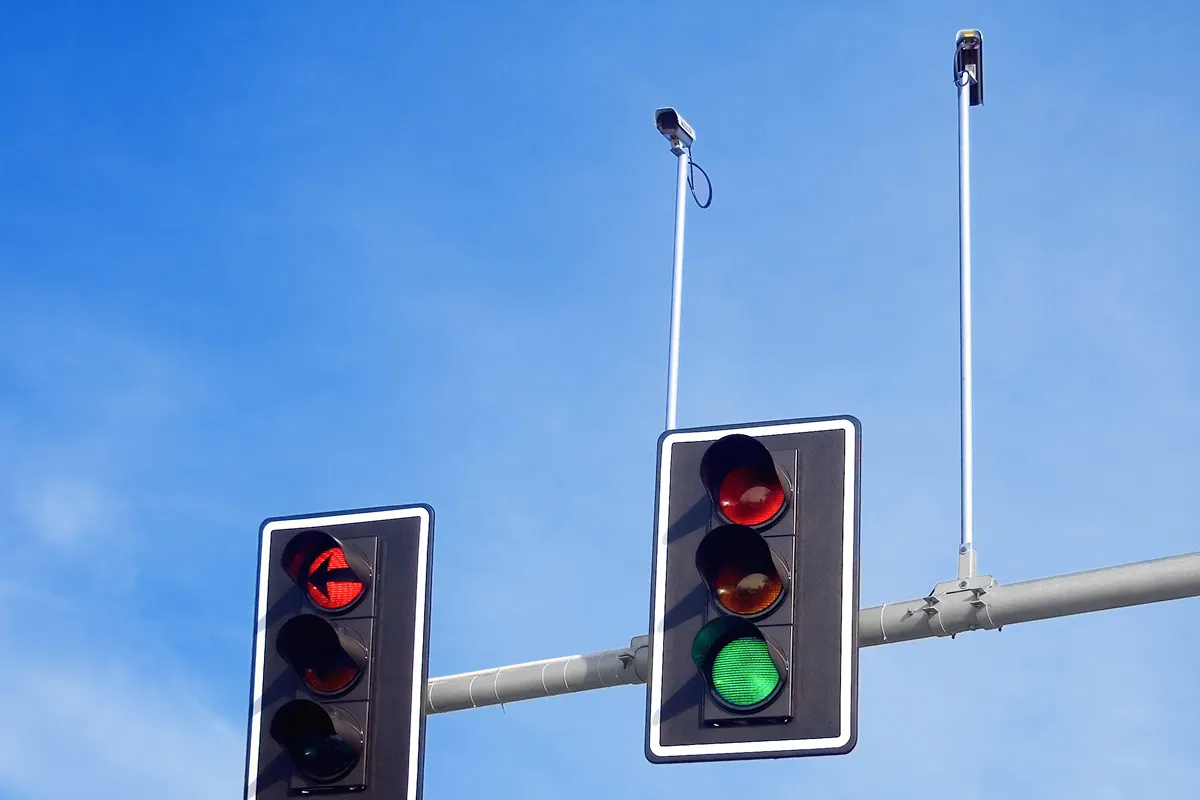
AI can detect danger before it becomes a disaster by spotting the telltale signs
Improving Safety Through AI-Enhanced Operations
Safety has always been the backbone of transportation. But for decades, it was a game of catch-up. Incidents happened, reports were filed, and only then did action follow.
Today, by continuously analyzing data from sensors, cameras, connected vehicles, and infrastructure, AI can detect danger before it becomes a disaster by spotting the telltale signs: near-misses, speeding, repeat violations, adverse weather, and growing congestion.
When risks are detected, systems respond instantly. Traffic lights are retimed in high-risk zones. Emergency crews are dispatched precisely where needed. Drivers see live alerts on digital signs, in-vehicle displays, or connected apps, prompting them to slow down, reroute, or adjust on the spot.
The results are real. In pilot cities, Intelligent Traffic Management Systems (ITMS) have reduced wrong-way crashes by 20% and overall crash rates by 14%. Vehicle-to-everything (V2X) technology could go even further, potentially preventing 13% of U.S. traffic accidents — over 439,000 crashes every year.***
This is more than a reaction; it’s prevention. And with every mile traveled, AI grows sharper, refining strategies to protect everyone, from drivers to pedestrians.
Partnering to Unlock What’s Possible
However, integrating AI across transportation comes with challenges from protecting data privacy to retrofitting legacy infrastructure and establishing shared standards. But the payoff is too big to ignore.
Quarterhill is committed to helping our partners capture the benefits of AI while addressing these realities. We go beyond collecting transportation data. We interpret the story behind every journey. By analyzing massive flows of information from vehicles, infrastructure, and users, we identify inefficiencies, uncover patterns, and design solutions that scale across entire ecosystems.
From predictive maintenance to turning fragmented data into actionable insight, we work side-by-side with agencies and operators to future-proof operations, not just for what’s next, but for what’s possible. Building a smarter transportation system requires more than just AI. It takes collaboration, insight, and a commitment to solving the right problems.

Conclusion: Balancing Progress with Responsibility
There was a time when our transportation systems operated in the dark; disconnected, reactive, and limited by the boundaries of human oversight.
AI is lighting the way forward by enabling roads, vehicles, and infrastructure to work together, to adapt, and to improve with every journey. From traffic flow to fleet management to transit planning, it’s helping leaders make decisions grounded in data, not guesswork.
But with this power comes responsibility.
How do we balance innovation with equity? Safety with speed? Automation with employment?
The leaders who will define the next era of transportation won’t just build smarter systems, they’ll build them responsibly. The question is, who will be smart enough to lead the way?
Raman Jafroudi serves as Senior Director of Business Development at Quarterhill. As a Senior Sales and Business Development Leader, Certified Project Manager, and Technology Specialist, he brings over 20 years of international experience across North and Central America, Europe, and Asia. With deep expertise in tolling, Intelligent Transportation Systems (ITS), and smart mobility, he specializes in sales strategy, project management, and delivering innovative end-to-end technology solutions.
At Quarterhill, Raman leads sales and business development efforts in tolling and ITS, driving revenue growth, and market expansion across North America and globally.
Raman holds an M.S. in Telecommunications Engineering and a B.S. in Electrical Engineering from Vienna University of Technology.
References
* Predictive Maintenance Savings
** Traffic Optimization & Emission Reduction
*** Improving Safety
The Moonshot Plan to Eliminate Deaths on America’s Roads
Artificial Intelligence in Traffic Safety: Revolutionizing Accident Prevention





